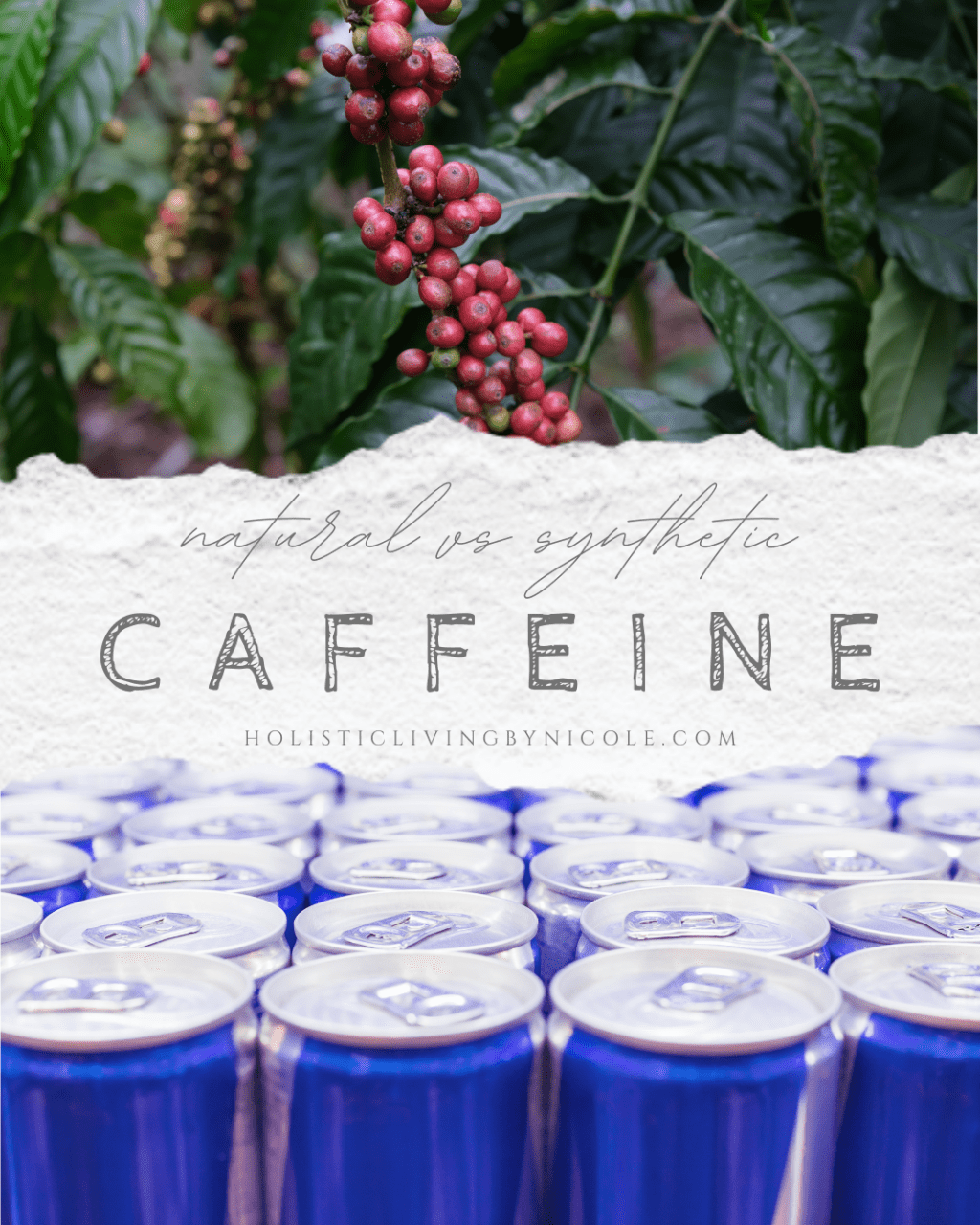
Hello friends! Let’s talk about synthetic vs natural caffeine: what you need to know.
Known as ‘caffeine anhydrous’, synthetic caffeine was first developed by the Nazis in 1942 to keep caffeine supplies available during the embargoes emplaced by the War. By 1953, both Monsanto and Pfizer had synthetic caffeine factories up and running in America
Synthetic caffeine starts with ammonia. Ammonia is converted to urea. Then you combine urea and chloroacetic acid to produce a compound called uracil. In turn, the uracil is processed and converted to theophylline.
The final touch is to add methyl chloride to produce the final product: methylated theophylline (synthetic caffeine).
However, the raw synthetic caffeine often glows – a bluish phosphorence – not a good look. This glowing is removed by rinsing the caffeine with sodium nitrite, acetic acid, sodium carbonate and chloroform. The pure stuff is strong, lethal in fact in small doses (a tablespoon of synthetic caffeine will kill you).
Back in 1995, the Pfizer plant in Grocon, Connecticut, had a major accident in which a yellow cloud of lethal nitrogen oxide escaped the plant and the entire factory had to be evacuated.
In 2016, the majority of the world’s synthetic caffeine came from just one Chinese town: Shijiazhung – a heavily polluted industrial city in Hebei province.
There is very little information in the world of synthetic caffeine. Almost no one even knows that caffeine is not naturally extracted anymore and the energy drinks industry is in no rush to make this clear on their packaging.
Manufacturers are not obliged to state if the caffeine is natural or synthetic.
The only country in the world where you are guaranteed to have natural caffeine in your drinks is Japan. Japan outlaws the use of synthetic caffeine in food and drinks as an additive.
Natural Grocers is a great store to find naturally sourced caffeine products – they will not allow synthetic caffeine in their stores. I hope you find this information helpful – HAPPY DETOXING!
Source: ‘Caffeinated: how our daily habit hooks, helps and hurts us’ by Murray Carpenter and decadentdecaf.com
 HOLISTIC LIVING BY NICOLE, LLC
Leave a comment